Compare competitors on key issues and see what actually performs.
See what matters most right now.

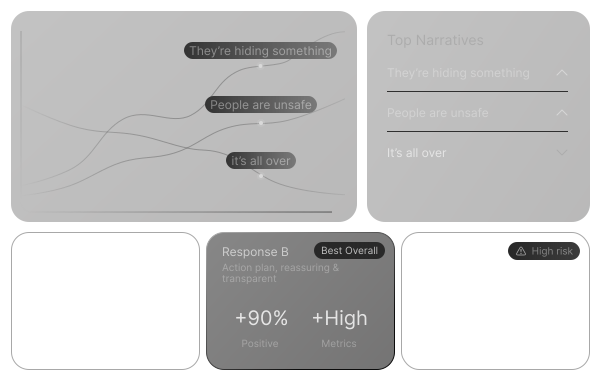
Identify early narratives and test responses before they escalate.
See the questions people are asking and how they cluster into narratives that shape understanding, fear, and expectation.
See narratives form as they happen and identify the language driving panic, anger, or skepticism. Act with clarity instead of waiting on reports.
Many tools surface volume without context. echo groups narratives by meaning, so teams can quickly focus on what people are actually trying to understand.
Draft a few response options and test them in real conversations. See which version increases clarity and trust, and which triggers defensiveness, by cohort and region.
When a message works, echo exports the language along with the drivers and risk notes. Teams can reuse it across spokespeople, FAQs, social, email, landing pages, and field scripts.
You ask, we answer.
Often within hours as new questions and phrasing cluster. You’ll see what’s rising, who it’s affecting, and where it’s spreading.
Yes – testing and reporting are aggregated by cohort and geography. No individual identities are exposed.
We cluster and label claims without pushing them back into distribution. Reporting focuses on prevalence, variants, and the clarifications that reduce belief.
Start by exploring what echo already knows. Go deeper when you’re ready.