








Most Helpful Notification
When anxiety is the context, people value the message that helps them avoid damage. Respondents slightly prefer a notification that helps them avoid missing a payment (52.5%) over a motivational payoff forecast (47.5%).
The gap is small, but meaningful. The core need here is protection. People want to avoid a penalty spiral. In practice, “keep me safe from mistakes” lands stronger than “keep me positive about progress.”

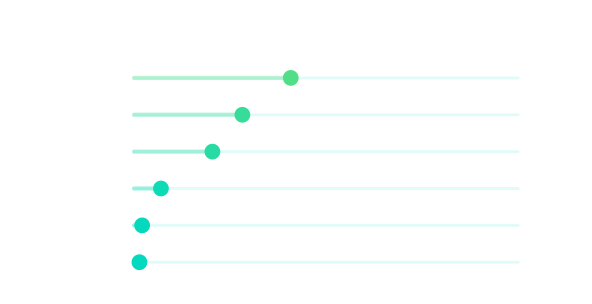
Trust is driven by the absence of “gotchas.” The top trust builder is no surprise fees (40.8%), followed by clear terms and conditions (28.2%). Flexibility and hardship options (20.4%) come next. It shows trust comes from clarity, plus the sense that the system won’t punish you when life happens.
Proactive alerts (7.0%) help, but they’re not the main story here. Educational tools and fast human support rank low. People trust what they can predict, so clarity and fairness outperform guidance.
Feature Priorities and Stress Response
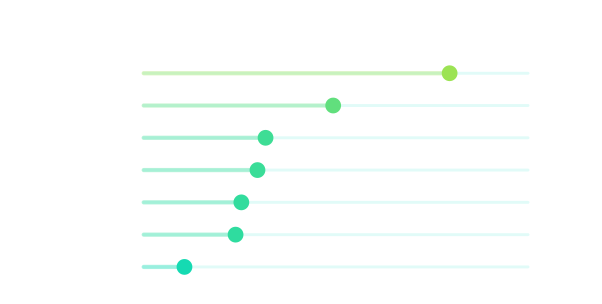
The dominant ask is timing flexibility. Due date flexibility is the runaway #1 feature (79.6%), far ahead of everything else. The next tier is payoff planning (49.3%). People want a better schedule and a clearer path out.
Everything after that sits in the “helpful support” bucket: warnings, transparency, support, and guardrails. Useful, but not core. The theme stays consistent. Anxiety reduces when repayment feels aligned to reality (paydays, shocks) and when progress feels legible (a simple payoff plan).
When anxiety spikes, responses fall into two modes. One group tries to regain control: budgeting, planning, paying down, cutting spend. Another group goes into avoidance: procrastinating, ignoring, or trying not to think about it.
What people wish the card did differently maps directly onto that split. Control-mode users want tools and flexibility. Avoidance-mode users need prevention and gentle scaffolding that reduces harm without requiring willpower in the moment.

Anxiety is often ambient
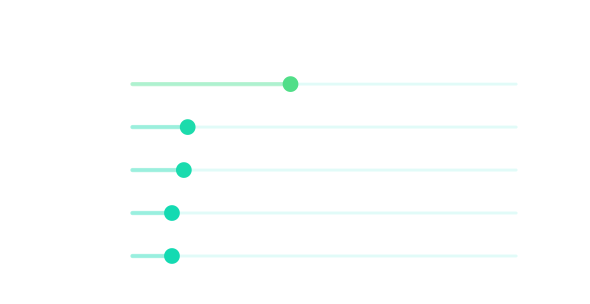
The most common description of credit card anxiety is persistent background stress (41.2%). It’s there in the day-to-day. The spikes are more specific and repeatable: due date timing issues (14.4%), unavoidable large expenses (13.4%), surprise fees or interest changes (10.3%), and sudden cashflow shortfalls (10.3%).
This makes the problem feel less like “financial literacy” and more like system design. People fear the moments where a rigid schedule collides with real life: paychecks, emergencies, unexpected costs.
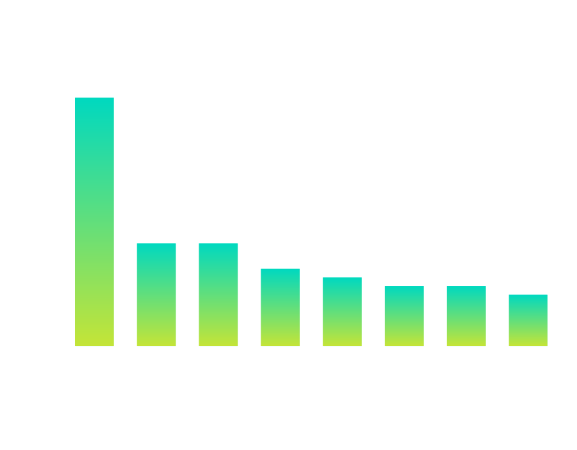
Even with anxiety, credit cards are still part of everyday behavior. The top reason is routine spending (31.5%). After that come rewards and safety (13.0% each), and credit building (9.8%). This is the “optimizer” and “safety-first” world: convenience, protection, and benefits.
There’s also a strained segment: people using cards for emergencies, carrying balances, or actively trying to pay down debt. The same product is showing up in two very different lived realities.
Anxiety Is Misalignment and Uncertainty
Credit card anxiety comes from a system that feels rigid, unpredictable, and easy to get punished by.
- People value penalty prevention: the “might miss a payment” alert edges out encouragement (52.5% vs. 47.5%).
- The #1 feature request is cashflow alignment: due date flexibility dominates (79.6%).
- Trust is predictability: no surprise fees (40.8%) and clear terms (28.2%) lead by a wide margin.
- Anxiety is often persistent: constant worry is the modal experience (41.2%), with spikes from timing mismatch and shocks.
- Users split into segments: optimizers/safety-first users coexist with strained users and a no-card subset.
The opportunity is to build trust like infrastructure. Align repayment timing to real life. Eliminate “gotcha” economics. Provide simple payoff planning that reduces cognitive load. Do that, and you reduce anxiety, reduce missed payments, improve retention, and make the product feel fair.
Build Trust by Reducing Punishment
People don’t want more motivation from their credit card. They want fewer ways to get hurt, especially when they’re already stressed.
This study points to the same root causes in both the quantitative and qualitative data: timing mismatch, surprise costs, and rigid policies. Those factors turn “constant worry” into sharp stress spikes when real life hits. Trust is won through predictability: no surprise fees, clear terms, and flexibility that matches cashflow reality.
Here’s what this means in practice. Lead with due date flexibility and grace options. Pair them with an action-first payoff plan builder. Reinforce it all with proactive “avoid the fee” alerts. When the product feels aligned, legible, and non-punitive, anxiety becomes manageable and trust becomes durable.